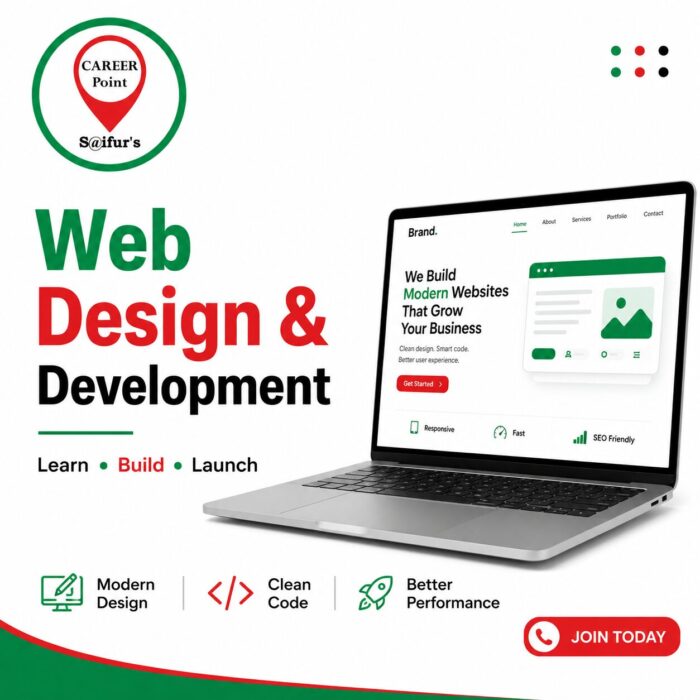
Web Design & Development Course

Build Modern Websites with Practical Web Design & Development Skills

Turn your creativity into professional digital skills with the Web Design & Development Course at Career Point S@ifur’s.
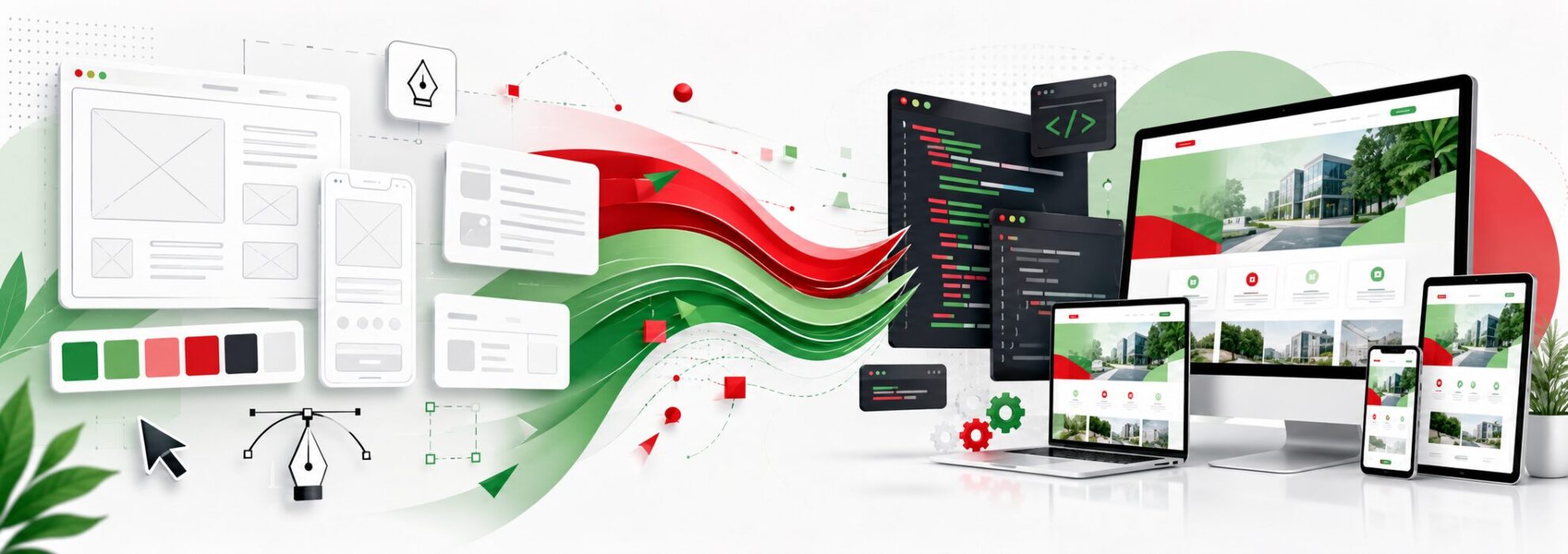
This practical course is designed to help students understand how modern websites are planned, designed, developed and prepared for real users. From building clean page layouts to creating responsive websites that work across mobile phones, tablets and computers, learners receive step-by-step guidance throughout the course.

Whether you are a student, job seeker, aspiring freelancer, entrepreneur or complete beginner, this course can help you build a strong foundation in web design and development.
Learn. Design. Code. Launch.

Learn Web Design and Development from the Basics

A professional website requires more than an attractive appearance. It must also be responsive, organised, user-friendly, fast and easy to navigate.

At Career Point S@ifur’s, students learn the core skills required to create modern websites through guided lessons, demonstrations, exercises and practical projects.

You will learn how to:
– Plan the structure of a website
– Create clean and professional page layouts
– Build websites using modern web technologies
– Make web pages responsive on different devices
– Improve website usability and navigation
– Work with images, buttons, menus, forms and content sections
– Understand domain, hosting and website publishing
– Complete practical website projects

The course focuses on learning by doing, helping students understand how individual design and development skills work together in a complete website.

What You Will Learn

01.

Website Planning and Structure

Before creating a website, it is important to understand its purpose, audience and content structure.

Students learn how to plan:
– Website goals
– Page hierarchy
– Navigation menus
– Content sections
– User journeys
– Calls to action
– Basic wireframes and layouts

This planning process helps learners create websites that are organised and easy to use.

02.

HTML for Website Structure

HTML is the foundation of a web page. It defines the structure and content displayed in a browser.

During the course, students learn how to work with:
– Headings and paragraphs
– Images and links
– Lists and tables
– Forms and input fields
– Buttons
– Semantic page sections
– Headers, footers and navigation areas

Students practise creating properly structured pages rather than simply memorising code.

03.

CSS for Modern Website Design

CSS controls the visual appearance of a website.

Learners explore how to style websites using:
– Colours and backgrounds
– Typography
– Spacing and alignment
– Borders and shadows
– Buttons and cards
– Page sections
– Flexible layouts
– Hover effects
– Basic transitions and animations

By combining HTML and CSS, students can transform a basic web page into a polished digital experience.

04.

Responsive Web Design

Most website visitors now use different screen sizes. A website must therefore adapt smoothly to desktops, laptops, tablets and smartphones.

Students learn the principles of responsive design, including:
– Mobile-friendly layouts
– Flexible grids
– Responsive images
– Breakpoints
– Media queries
– Mobile navigation
– Content resizing
– Cross-device testing

The goal is to create websites that remain easy to read and use on every major device.

05.

Introduction to Interactive Web Development

Modern websites often include interactive elements that respond to user actions.

Students receive an introduction to important development concepts such as:
– Variables and basic programming logic
– Events and user interactions
– Form behaviour
– Menu interactions
– Content updates
– Basic website functionality
– Error checking and troubleshooting

This gives learners a clearer understanding of how static designs become interactive websites.

06.

UI and UX Design Fundamentals

A successful website should look attractive while remaining simple and intuitive.

The course introduces students to key user interface and user experience principles, including:
– Visual hierarchy
– Readable typography
– Consistent colours
– Balanced spacing
– Clear navigation
– Accessible buttons
– Effective calls to action
– User-friendly forms
– Mobile usability

These principles help students create websites that are not only visually appealing but also practical for real visitors.

07.

Website Publishing, Domain and Hosting

Creating a website is only part of the process. Students should also understand how websites become accessible online.

Learners are introduced to:
– Domain names
– Web hosting
– Website files
– Control panels
– File uploading
– Basic deployment
– Website backups
– SSL and website security basics
– Website maintenance

This knowledge helps students understand the complete website development workflow.

Practical Projects You Can Build

Practical work is an important part of learning web design and development.

Depending on the course syllabus and batch progress, students may practise creating projects such as:
– Personal portfolio website
– Educational institute website
– Small business website
– Service-based landing page
– Restaurant or travel website
– Product showcase website
– Blog layout
– Contact and enquiry page
– Responsive multi-page website

These projects can help students demonstrate their growing skills and begin building a personal portfolio.

Career and Freelancing Opportunities

Web design and development skills can be useful across businesses, agencies, startups, educational institutions and freelance marketplaces.

After developing sufficient skills and completing practical projects, learners may explore opportunities such as:
– Junior web designer
– Front-end development trainee
– Website content and layout assistant
– Landing page designer
– Responsive web designer
– Freelance website creator
– Website maintenance assistant
– WordPress website assistant
– UI implementation trainee
– Digital agency intern

Career outcomes depend on the learner’s practice, portfolio, communication ability and continued development after completing the course.

Who Should Join This Course?

The Web Design & Development Course is suitable for:
Students: Develop a useful technical skill alongside your academic studies and prepare for future digital opportunities.
Job Seekers: Build practical website development knowledge that may support applications for entry-level digital and technology roles.
Aspiring Freelancers: Learn skills commonly required for website design and development projects on freelance marketplaces and through direct clients.
Entrepreneurs and Business Owners: Understand how business websites work and learn how to manage or create an online presence for your brand.
Graphic Designers: Expand your creative abilities by learning how visual designs are converted into functional web pages.
Complete Beginners: No advanced technical background is required to be

Skills You Can Develop

By completing the course and practising regularly, you can develop abilities in:
Website layout planning
HTML page development
CSS styling
Responsive design
Basic programming logic
UI and UX principles
Website navigation
Form creation
Mobile optimisation
Website testing
Basic hosting and deployment
Project presentation
Problem-solving
Client requirement understanding

Why Learn at Career Point S@ifur’s?

Beginner-Friendly Learning

The course is structured to help learners understand concepts gradually, even when they have no previous coding experience.

Practical Training

Students work on exercises and website projects that help turn theoretical knowledge into usable skills.

Step-by-Step Guidance

Complex topics are explained through organised lessons, demonstrations and guided practice.

Modern Course Focus

The training focuses on current website design principles, responsive layouts and user-friendly development practices.

Supportive Learning Environment

Students can ask questions, practise with guidance and receive help while developing their projects.

Career-Oriented Skills

The course is designed to build skills that can support employment, freelancing, entrepreneurship and continued technical education.

Contact for Admission Information

📞 Phone:

+880 1720-363895

📣 Connect on Social Media:

Frequently Asked Questions

Start Building Your Digital Future

The demand for professional websites continues across education, retail, healthcare, travel, corporate services, e-commerce and many other industries.

Learning web design and development can provide a foundation for multiple digital career paths. It can also help you turn ideas into functional websites, support businesses online and continue learning advanced technologies in the future.

At Career Point S@ifur’s, you can begin with the fundamentals and progress through practical website development in an organised learning environment.

Or Call Us at

+880 1720-363895

Find Us on Google Maps

Take the First Step Today

Contact us now and discover the course that is right for you. Your journey to success starts here.

Scroll to Top